
When Watch Hands Fall Out of Alignment: Causes and Corrections
Date: 28/10/2026 | By: Exclusive Lines
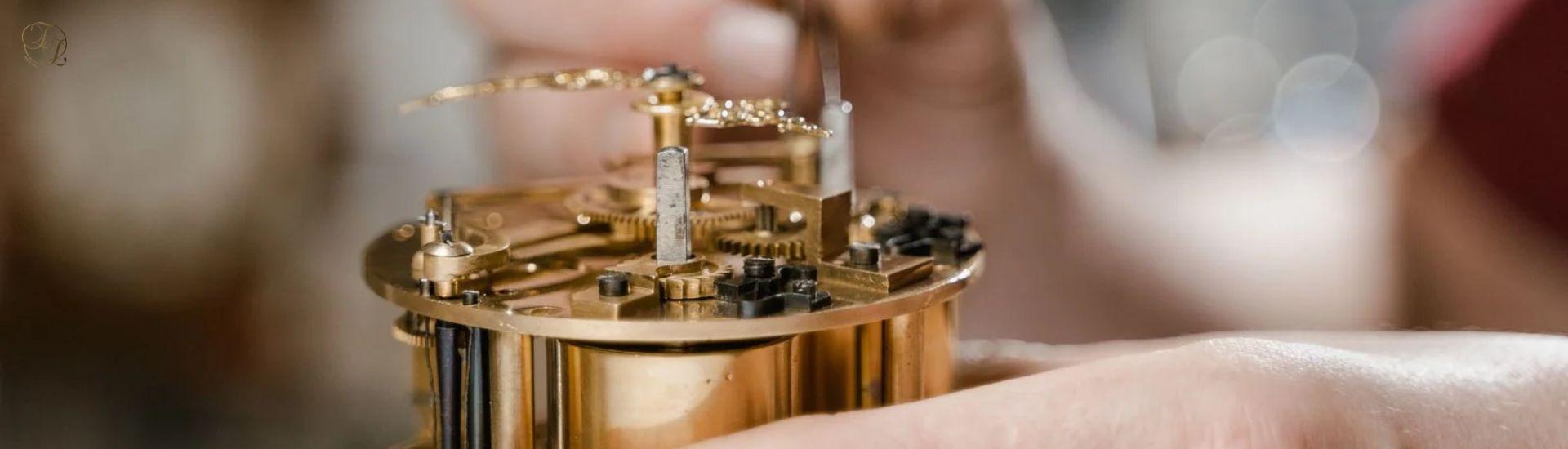
You know your watch well enough to notice when something feels slightly off.
Perhaps the minute hand reaches twelve, but the hour hand does not sit exactly where you expect it to. Or a chronograph hand returns after timing an event but stops just beside its zero marker.
The difference may be small, yet once you notice it, it becomes difficult to ignore.
Hand misalignment can happen for several reasons, and it does not necessarily mean that the entire movement has developed a serious problem. What matters is understanding why it has happened before attempting to correct it.
What Does Watch Hand Misalignment Actually Mean?
A watch contains several components working together beneath the dial. The movement controls the passage of time, while the hands translate that information into something you can read.
When the hands no longer point exactly where they should, the issue is generally described as hand or reference-position misalignment.
It can appear in different ways. The hour and minute hands may no longer correspond perfectly with each other, or a chronograph hand may fail to return precisely to its starting position after being reset.
Sometimes the deviation is obvious. In other cases, you may only notice it when the hands reach a particular hour.
Either way, it is worth having the watch examined rather than assuming what has caused it.
Why Can Watch Hands Move Out of Alignment?
There is no single reason, which is why diagnosis comes before adjustment.
A Sudden Impact
A watch is designed to handle normal daily movement, but a significant knock or accidental drop can affect components inside it.
Depending on the construction of the movement, an impact may disturb a hand’s reference position or affect another part of the mechanism responsible for displaying the time.
You may not notice anything immediately. The watch might continue running normally while one hand appears slightly out of position.
Magnetic Influence
We are surrounded by magnetic objects in everyday life, from speakers and electronic devices to magnetic clasps.
Magnetism is more commonly associated with changes in timekeeping accuracy in mechanical watches. In some analogue movements, however, strong magnetic influence can also affect the reference positions used by the hands.
If a watch suddenly starts gaining or losing significant time alongside unusual hand behaviour, magnetism is one of the possibilities a watchmaker may check.
The Hands May Need Repositioning
Sometimes the movement itself is operating correctly, but one or more hands are no longer positioned exactly as intended.
This can require the hands to be carefully removed and reset so that the hour, minute and seconds indications correspond correctly.
With chronographs and other watches containing additional hands, the process can involve checking several reference positions rather than simply adjusting the main time display.
Wear Within the Movement
Mechanical components naturally interact with one another every time a watch runs.
Over long periods, components can require cleaning, lubrication, adjustment or replacement. If a hand-alignment issue appears together with irregular timekeeping or other functional problems, the watchmaker may need to look further into the movement rather than treating the hand itself as the only issue.
Is a Slightly Misaligned Hand Serious?
Not every small deviation means that major repairs are required.
But if the alignment has changed noticeably, particularly after an impact or alongside another issue, it is worth having the watch checked.
The important thing is not to try pressing, bending or repositioning the hands yourself. They are extremely light components positioned very close to the dial, crystal and, in many watches, each other.
An incorrect adjustment can leave marks on the dial, damage a hand or introduce another problem that was not there originally.
How Does a Watchmaker Correct Misaligned Hands?
The first step is usually observation rather than immediate repair.
A watchmaker needs to establish whether the issue is with the physical position of the hands, the movement, a reference-position setting or another component.
The watch can then be opened using the appropriate tools and procedures for its construction.
If physical repositioning is required, the hands may be carefully removed and installed again at their correct positions. The watchmaker checks that they correspond accurately with one another and have sufficient clearance to move without making contact.
For certain movements, particularly watches with electronically controlled or additional indicator hands, correcting the reference position may involve a specific calibration procedure rather than physically removing the hands.
This is why two watches showing what appears to be the same problem may require completely different solutions.
Why the Right Service Environment Matters
Working around a dial and hands leaves very little room for error.
A fingerprint, small mark or particle of dust that would be insignificant elsewhere can be immediately noticeable beneath a watch crystal. Proper tools and careful handling therefore matter just as much as the adjustment itself.
A professional luxury watch service centre can also examine the watch more broadly instead of addressing only what is visible.
If an impact caused the hands to move, for example, it makes sense to check whether anything else has been affected.
Depending on the watch and the work performed, final checks may include the movement’s timing, functions, power reserve and water resistance before the watch is returned.
Why a Quick Fix May Not Be the Best Fix
A hand that looks slightly out of place can make the repair seem straightforward.
Simply moving it back into position, however, does not answer the more important question: why did it move?
If the cause is an impact, magnetism, a reference-position issue or something within the movement, repositioning the hand alone may not address the underlying problem.
Luxury watches can also require model-specific tools, procedures and replacement components. This is where an authorised or appropriately equipped service centre becomes particularly important.
The objective should not simply be to make the hand look straight again. It should be to return the watch to proper working condition while protecting the dial, movement, case and water-resistance system.
When Should You Have Your Watch Checked?
If you notice that the hands no longer align as they previously did, observe the watch for any other changes.
Has it recently received a strong knock? Is it gaining or losing more time than usual? Does a chronograph hand fail to return to zero? Does the issue happen consistently at the same point on the dial?
These details can be useful when explaining the problem to a watchmaker.
Most importantly, avoid trying to correct the hands yourself.
At Exclusive Lines India, our service team can assess luxury watches and determine the appropriate next step based on the movement and the nature of the issue.
If you find yourself searching for a luxury watch service center in Kolkata after noticing something unusual on the dial, start with a proper assessment. A small change in the position of a hand may be simple to correct, but understanding what caused it is the more important part of the repair.