
The Legacy Of Chopard Happy Diamonds: Where Diamonds Move Freely
Date: 14/09/2026 | By: Exclusive Lines
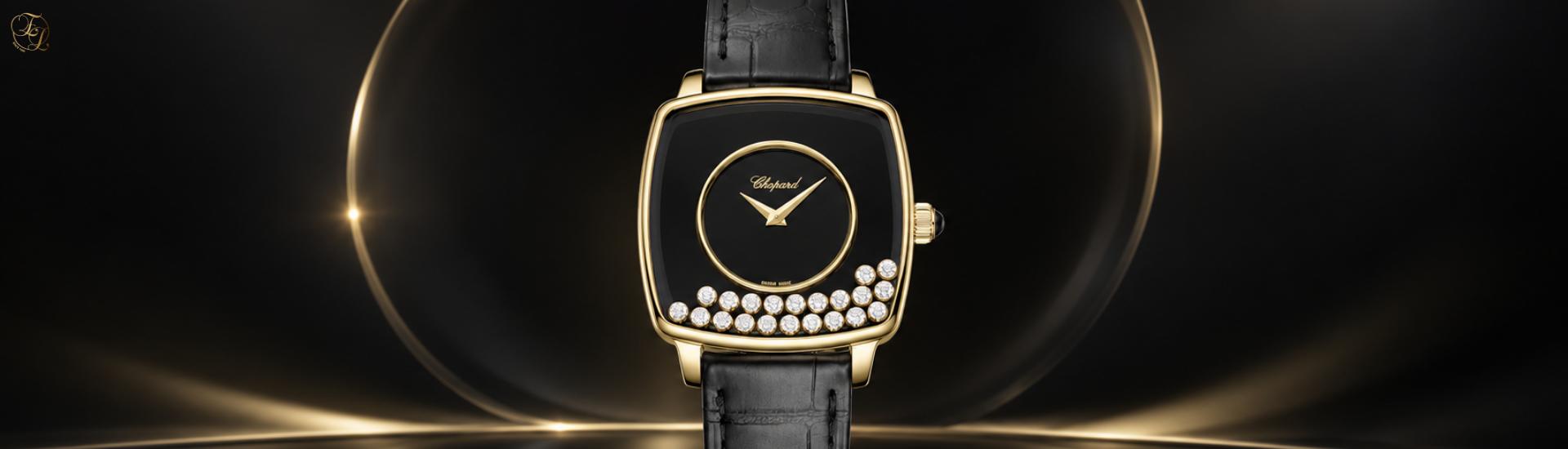
Most diamond jewellery is designed around stillness. Each stone is carefully set, held in place, and admired for its brilliance. Chopard took a different path. It imagined diamonds with movement, personality, and lightness.
This idea gave birth to Happy Diamonds in 1976 — one of the brand’s most recognisable creations.
Instead of placing diamonds in a fixed setting, Chopard enclosed them between two sapphire crystals. This allowed the stones to glide freely with every movement of the wrist or hand. The result was elegant, playful, and technically thoughtful! It changed the way diamond watches and jewellery could be worn.
The Beginning Of A New Idea
The idea was inspired by the sparkle of water droplets in motion. Chopard saw that light looks even more beautiful when it is moving, not standing still.
That thought led to the famous line: “Diamonds are happier when they are free.”
It was a simple idea, but it changed the way people looked at diamond watches and jewellery. The diamonds were no longer just decoration. They became part of the character of the piece.
With every movement, the design looked slightly different. That made each watch or jewellery creation feel more personal to the wearer.
How The Design Works
The stones are placed in a protected space between sapphire crystals. Sapphire is used because it is clear, durable, and highly resistant to scratches.
The space has to be just right. If it is too narrow, the diamonds cannot move properly. If it is too wide, the design can lose its balance. Chopard’s craftsmanship lies in making this technical detail feel natural and graceful.
A Reflection Of The 1970s
Happy Diamonds arrived during a period when fashion and jewellery were becoming more expressive. Women were moving away from rigid ideas of elegance and choosing pieces that reflected freedom, individuality, and confidence.
Chopard captured that mood beautifully. The floating diamonds felt refined without being too formal. They could suit an evening occasion, yet still carry a sense of charm and spontaneity.
This made the collection stand apart from traditional diamond jewellery of the time.
From Happy Diamonds To Happy Sport
In 1993, Chopard introduced Happy Sport, a watch that carried the same free-moving diamond concept into a more modern and wearable design.
This was an important moment in luxury watchmaking. The idea of combining diamonds with a sporty steel watch was unusual then. Diamonds were often linked with precious metals and formal jewellery, but Happy Sport showed that they could also feel relaxed, contemporary, and versatile.
Caroline Scheufele played a key role in shaping this direction. Her vision helped create a watch for women who wanted elegance without restriction — something refined enough for special moments, yet easy enough for everyday style.
Why The Legacy Continues
Happy Diamonds remains memorable because its identity is clear. The design is not recognised only by shape or material, but by movement. Every glance feels slightly different because the stones never stay in exactly the same place.
That is what makes the collection personal. It responds to the wearer.
Over the years, the concept has expanded into watches, pendants, rings, bracelets, and earrings, while keeping its original spirit intact. It continues to appeal to women who appreciate jewellery with emotion, history, and a distinctive design language.
Experience Chopard At Exclusive Lines India
The legacy of Chopard Happy Diamonds lies in a simple yet powerful idea: diamonds can be more beautiful when they move.
By bringing together fine jewellery, Swiss watchmaking, and a sense of freedom, Chopard created a collection that still feels modern decades after its introduction.
Explore Chopard watches at Exclusive Lines India, where timeless design, expert guidance, and personal service help you find a piece that feels truly your own.